Sliding doors are one of the defining features of Gold Coast homes. Whether it’s a wide glass panel opening onto a deck in Burleigh Waters, a stacker door leading to a pool area in Palm Beach, or a traditional two-panel slider in a Robina family home, these doors see constant use, constant sun exposure, and constant contact with salt air. Over time, the frames deteriorate — and searching for an aluminium door frame paint peeling fix is one of the most common renovation queries we receive. This guide covers everything you need to know about sliding door frame painting: why frames fail, how the painting process works, what to expect in terms of results, and whether it’s worth doing professionally.
Why Sliding Door Frames Deteriorate Faster Than Window Frames
Sliding door frames cop more punishment than standard window frames for several reasons. They’re larger, which means more surface area exposed to UV and coastal conditions. They’re used constantly — opening and closing dozens of times a day — which causes mechanical wear on the paint at points of contact. And they’re typically located on the ocean-facing or sun-facing side of the home, meaning they receive the full brunt of Queensland’s UV radiation.
The result is frames that fade, chalk, oxidise, and peel faster than you might expect. Powder-coated frames from the 1990s and early 2000s in particular are highly susceptible to this kind of degradation — the powder coat itself often remains structurally intact while looking cosmetically terrible: chalky, faded, or discoloured. Anodised frames in old bronze or silver tones simply look dated in the context of modern renovation trends.
Understanding the Aluminium Door Frame Paint Peeling Problem
If you’re already dealing with an aluminium door frame paint peeling fix situation — meaning paint is actually coming away from the surface — it’s important to understand what’s caused it before repainting. Peeling on aluminium frames typically has one of a few causes:
- A previous DIY paint job that used the wrong primer or skipped priming altogether
- A brush-applied coat over a surface that wasn’t properly degreased or abraded
- Moisture trapped beneath the coating due to painting in high humidity
- A coating that simply wasn’t designed for exterior aluminium use in a coastal environment
The aluminium door frame paint peeling fix for all of these scenarios is the same: strip back the failing paint, properly prepare the bare aluminium, prime with a suitable metal etch primer, and apply a quality industrial topcoat. Painting over peeling paint without removing it is never a long-term solution — it will simply peel again, usually faster than before.
The Professional Sliding Door Painting Process
A properly executed sliding door frame paint job follows a specific sequence. Rushing or skipping steps is what leads to premature failure. Here’s what a professional process looks like:
- Panel removal: The sliding panels are removed from their tracks to allow access to the full frame, including the recessed areas that are impossible to coat properly with the door in place.
- Hardware removal: Handles, locks, rollers, and weather seals are removed so they can be cleaned and reinstalled without overspray or masking complications.
- Surface preparation: All frame surfaces are sanded with appropriate grit to remove imperfections and create a mechanical key for the primer.
- Degreasing: A wax and grease remover is applied to ensure the surface is completely free of oils, silicone, and contaminants.
- Masking: All glass panels, rubber seals, and floor tracks are thoroughly masked and protected with plastic and tape.
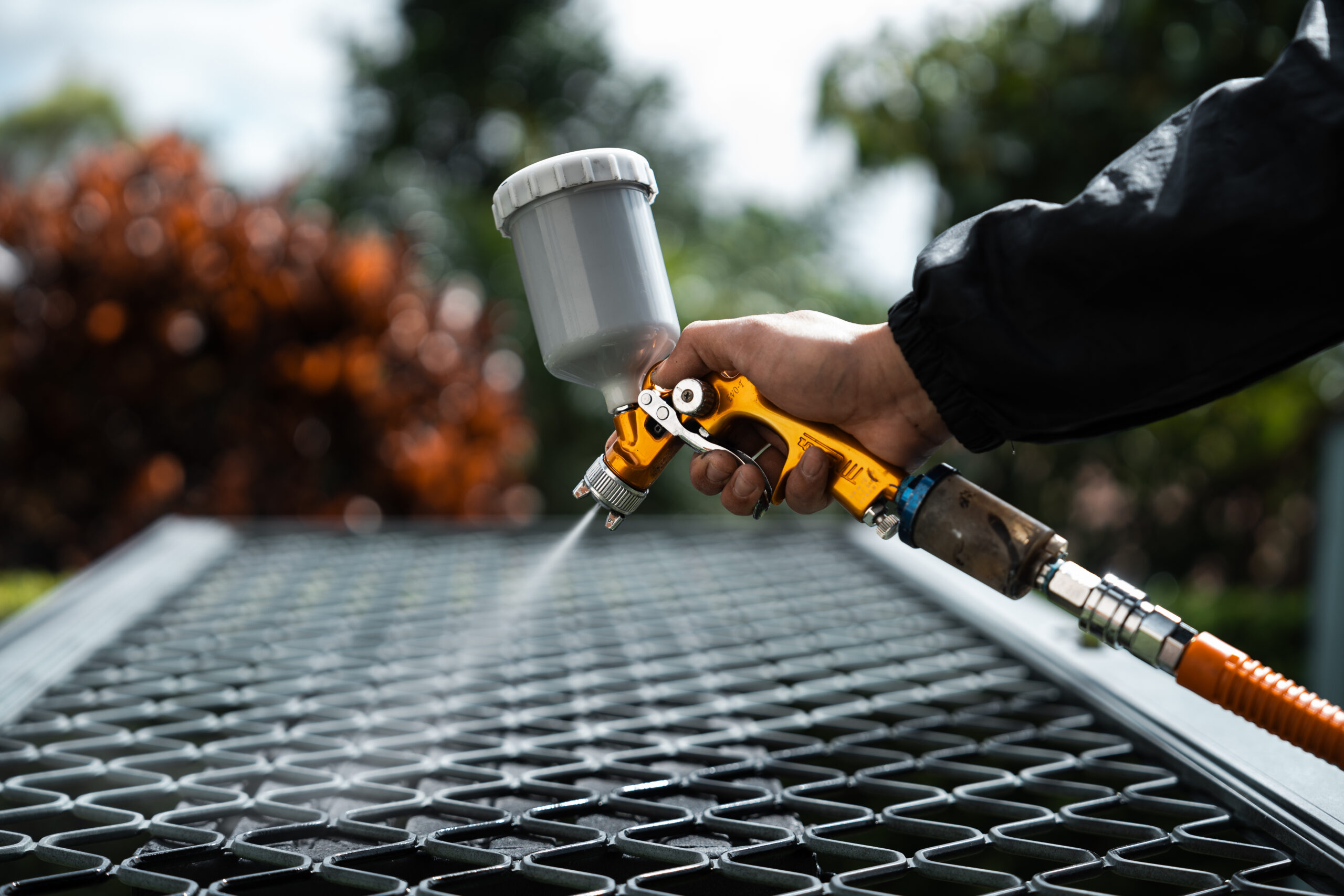
- Priming and topcoating: Industrial coatings are applied in multiple coats using HVLP spray equipment for a smooth, factory-grade finish.
Colour Choices for Sliding Door Frames on the Gold Coast
Colour selection for sliding door frames deserves as much attention as window frame colours, since sliding doors are typically one of the most visually prominent features of a home’s indoor-outdoor transition.
The most popular choices we’re seeing right now across Gold Coast suburbs are satin black (dominant in contemporary and modern builds), pearl white and surfmist (clean and fresh on coastal and Hamptons-style homes), and monument or woodland grey (versatile neutrals that work across a wide range of architectural styles). If you’re updating both your window frames and sliding door frames — which we recommend — choose your colour palette as a single decision so everything is cohesive.
Can You Paint Just One Sliding Door?
Yes — and this is actually a common scenario. Many homeowners have had a new door installed that doesn’t colour-match the existing frames, or they’ve had one door repainted previously and want the others to match. Single sliding door painting is absolutely achievable, though it does require careful colour matching.
If you’re looking at an aluminium door frame paint peeling fix on one specific door that’s failed while others are still in reasonable condition, a targeted repaint of just that frame is a practical solution. A good professional will be able to match existing frame colours closely, particularly for standard Colorbond palette shades.
Sliding Doors and Stacker Doors: Is the Process Different?
Stacker doors — those multi-panel systems that stack behind each other when fully open — require the same preparation approach as standard sliding doors but involve more panels and therefore more surface area and masking complexity. They also tend to have more intricate hardware that needs careful removal and reinstallation.
Bi-fold aluminium door frames follow a similar process. The key with any sliding or folding aluminium door system is that the moving components need to come out before painting, not just be masked in place. Painting over the tracks and rollers with the hardware still in position consistently leads to a substandard result and operational issues with the door afterwards.
How Long Does It Last?
A professionally applied industrial coating on a sliding door frame in a Gold Coast coastal environment, done with proper preparation, should realistically last seven to ten years before any significant touch-up is needed. Some jobs we’ve seen still looking strong at the ten to twelve year mark, particularly those protected by wide eaves or covered outdoor areas.
Factors that reduce longevity include direct coastal exposure with minimal cover, daily heavy use, and the specific colour chosen — very light colours like white require more careful preparation and sometimes additional coats to achieve adequate film build.
Is It Worth It?
The answer is almost always yes. Sliding door frames are highly visible, heavily used, and when they look tired, they drag down the entire feel of an outdoor area. Having them professionally painted is one of the highest-impact, lowest-cost upgrades you can make to a Gold Coast home — typically a fraction of the cost of door replacement, and with a result that looks just as good.
Whether you’re dealing with an aluminium door frame paint peeling fix, chasing a colour change, or simply want your sliding doors to match freshly painted window frames, professional painting is the most efficient and durable path to a result you’ll be happy with for years to come.
Aluminium Window Painting services the entire Gold Coast region including Burleigh, Miami, Palm Beach, Robina, and beyond. Get in touch for a free quote on your sliding door frames.