If you live in the Northern Rivers, you already know how hard this climate can be on your home’s exterior. Salt air, humidity, harsh summer sun, heavy rain—your windows cop the lot. So when people look for Aluminium Window Painting Byron Bay, they usually fall into one of two categories: the ones wanting a fresh, modern look and the ones trying to rescue windows that have seen better days.
Either way, the first thing I tell everyone is the same: painting aluminium windows properly is absolutely possible—if it’s done with the right prep, the right products, and the right process. It’s not the sort of job you rush, guess at, or try to shortcut. Aluminium’s a different beast compared to timber, and to get a finish that actually lasts in the Byron climate, every step needs to be deliberate.
After more than a decade doing this day in and day out, I’ve seen every kind of window, every kind of damage, and every kind of mistake homeowners or painters have made before calling us in. So this guide is designed to make the whole process clear, transparent, and simple—no mystery, no jargon, just the way we approach Aluminium Window Painting Byron Bay so you understand exactly what’s involved, why it works, and how to get the best long-term result.
Why Paint Aluminium Windows at All?
When aluminium windows first came onto the scene, they were sold as “maintenance-free.” Anyone who owns a coastal home knows that claim didn’t age well.
Over time you see:
-
Fading from UV exposure
-
Powdery chalking
-
Scratches and wear from use
-
Dated colours that date the entire façade
-
Pitting or dullness from salt air
For Byron Bay homeowners, the biggest driver is usually the desire to modernise. Black, Monument, Surfmist, White—whatever the look, updating your window colour shifts the whole feel of a home without the cost of replacement.
Painting aluminium windows isn’t just a cosmetic fix. When done properly, the coating acts as a fresh protective layer. It seals, shields, and strengthens the surface. And when done professionally, the finish looks identical to brand-new frames.
That’s why the demand for Aluminium Window Painting Byron Bay has grown so quickly—people want the look without the price tag and the disruption of tearing windows out.
The Key to Success: Prep Work, Not Paint
Let me say this outright:
95% of the final result comes down to how well the windows are prepared.
It’s not glamorous. It’s not fast. And it’s the reason DIY attempts often peel or scratch within months.
When you paint aluminium, you’re dealing with:
-
A slick surface
-
A metal that expands and contracts with heat
-
Exposure to salt air
-
Oxidation and old surface coatings
If you don’t prep correctly, paint simply won’t bond. It might look brilliant on day one, but the first hot week or storm will tell the truth.
Here’s the process we follow as standard—no shortcuts, no “that’ll do” moments.
Step 1: Full Site Assessment
Every project starts with a proper look at the windows. How old are they? What’s the condition of the existing coating? Any pitting? Any silicone issues? Any locks or tracks that need protecting?
For Aluminium Window Painting Byron Bay, we also consider your exposure—beachfront, hinterland, suburban street—because that affects both prep and product choice.
Step 2: Deep Cleaning and Degreasing
Aluminium collects grime that you don’t always see—sea salt, grease from hands, old polishers, airborne debris.
We use commercial-grade cleaners to strip every trace of contamination. If you skip this, paint won’t bond. It’s that simple.
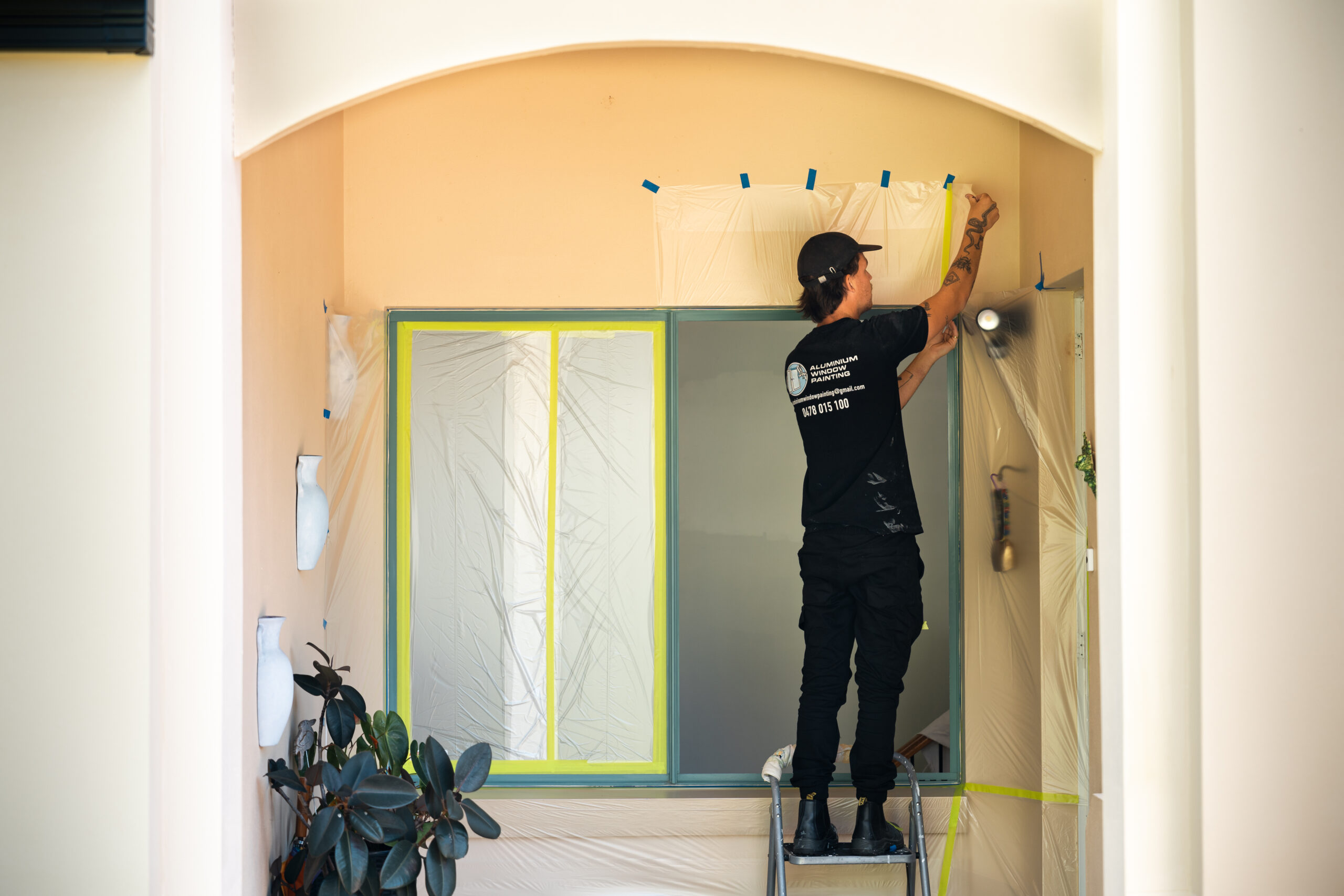
Step 3: Masking — The Part Everyone Underestimates
Good masking is what separates a professional job from a messy one.
We mask:
-
every edge
-
every join
-
all glass
-
every lock, track, hinge, flyscreen, seal, and sill
Clean, razor-sharp lines don’t happen by accident. They happen because someone took their time.
Step 4: Sanding
Aluminium needs a precise surface profile before any coating is applied.
We don’t “rough it up.”
We create a uniform mechanical key so the primer has something to bite onto.
This step is critical—especially in coastal areas.
Step 5: Priming With Metal-Specific Products
A proper etch primer is non-negotiable.
You can’t skip it.
You can’t substitute it.
The primer is what locks onto the aluminium and gives the topcoat a solid foundation. When you see aluminium windows peeling, 9 times out of 10, this step was either rushed or done incorrectly.
Step 6: Professional Spray Application
This is where experience matters.
Spraying aluminium is different from spraying walls, timber, or furniture. Aluminium heats quickly, cools quickly, and shows every defect if you don’t control your technique.
We apply multiple even coats with the same methods used in commercial aluminium finishing. The result:
-
smooth
-
consistent
-
factory-grade
-
no brush marks
-
no patchiness
It’s the finish that makes people say, “Are these new windows?”
And when the job is done correctly from the start, the windows don’t just look good—they stay that way.
This is why more locals search for Aluminium Window Painting Byron Bay instead of settling for a full replacement quote.
What Type of Paint Do We Use?
We use a market-leading industrial coating system designed specifically for aluminium. It’s UV-stable, flexible, durable, and proven to withstand coastal environments.
We back our work with a 7-year warranty, but we’ve repainted properties where the original finish was still perfect after 15 years. Like anything in Byron, the environment matters—salt exposure, shade, cleaning routines, and window orientation all affect lifespan—but a proper coating lasts far longer than most people expect.
Why Replacement Isn’t Always the Best Option
Full aluminium window replacement is:
-
invasive
-
expensive
-
disruptive
-
messy
-
unnecessary in most cases
Painting gives you:
-
the same modern aesthetic
-
the same impact
-
a fraction of the cost
-
minimal interruption inside your home
Most people only need to prep a room for a few hours at a time. You don’t have builders tearing things out, breaking tiles, or damaging walls.
Painting is simply the smarter choice.
And in places like Byron where design trends shift towards blacks, charcoals, and coastal whites, updating windows this way adds huge value to the home’s overall presentation—especially if you eventually sell.
Common Questions We Get About Aluminium Window Painting
Will the paint peel?
Not if the windows are prepared and primed correctly. With a proper system, the coating bonds permanently.
Is the finish smooth like factory aluminium?
Yes. It doesn’t look “painted.” It looks like new powder-coated frames.
Can all colours be matched?
Absolutely—even custom colours, heritage tones, or modern architectural palettes.
Do you paint sliding doors too?
Yes—frames, channels, even security screens.
How long does it take?
Most homes take 3–6 days depending on the number of windows and sliding doors.
The Byron Bay Difference
Not every region has the same challenges.
Byron has:
-
salty air blowing straight off the ocean
-
heavy rain periods
-
high humidity
-
extreme UV
These conditions push your coating harder. That’s why locals specifically look for Aluminium Window Painting Byron Bay—it’s not just about painting aluminium; it’s about painting aluminium for this climate.
Our entire system has been refined around longevity in coastal conditions. That’s why the finish holds, the colour stays true, and the windows keep looking fresh year after year.
Final Thoughts: Do It Once, Do It Properly
If you’re looking into Aluminium Window Painting in Byron Bay, the most important thing to understand is this—good results are all about the process. With the right prep, right primer, and right application, you can transform your home completely and extend the life of your windows for many years to come.
Painting aluminium isn’t just a cosmetic upgrade—it’s a smart, affordable, long-lasting improvement that gives you the look of brand-new windows without the stress, mess, or cost.
If you’re ready to modernise your home, protect your windows, and bring new life to your façade, aluminium window painting is one of the best investments you can make.